
Ninja warrior: legend of adven
TOH GamesAdventure
4.63.57K Reviews
- Version
- 1.94.1
- Installs
- 100.00M
- Age Rating
- Teen
Screenshots
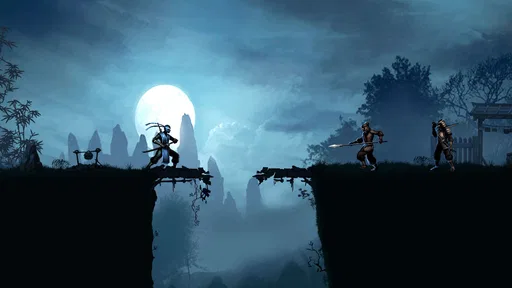
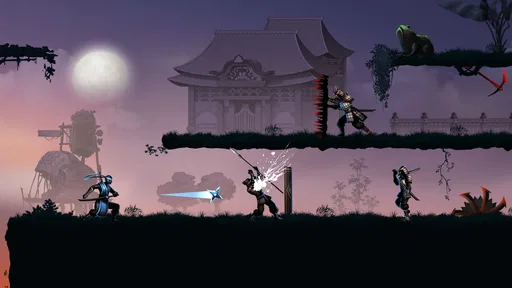
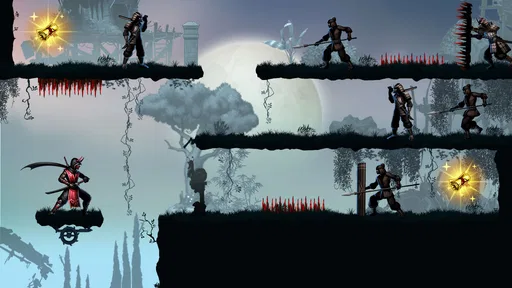
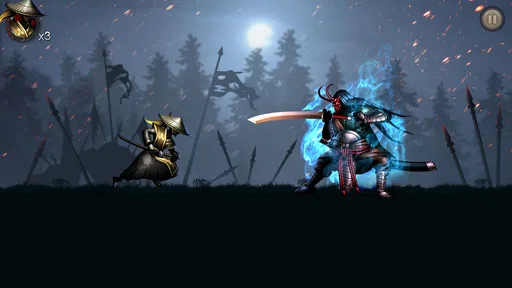
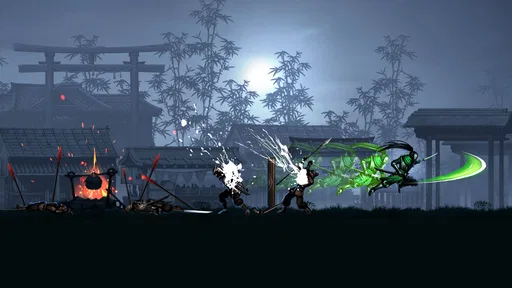
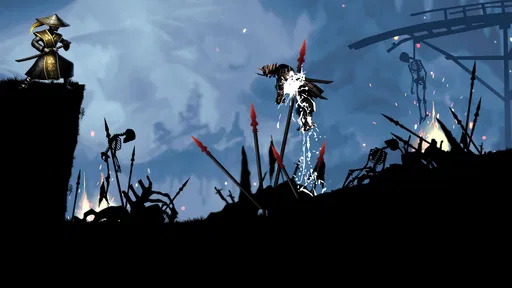
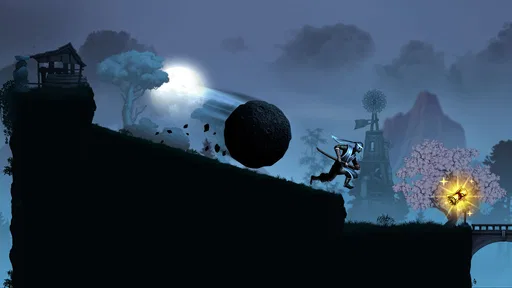
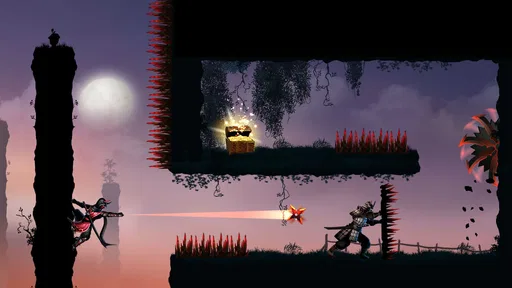
Our Review of Ninja warrior: legend of adven
 Analysis by Appyee
I spent time with Ninja warrior: legend of adven as a mobile adventure game, and my first impression was that it aims for quick, energetic ninja action rather than a slow, story-heavy journey. That distinction matters. I would recommend it to someone who wants short sessions built around movement, fighting, and steady progress, especially when a phone game needs to be easy to pick up without a long tutorial or complicated setup.
It is a free game from TOH Games, rated Teen, and it has become a very familiar name in its corner of mobile gaming. Its average rating is 4.6 from around 503 thousand ratings, while its reach has passed 100 million installs. Those figures suggest a broad audience, but they do not automatically make it the right choice for everyone. In my experience, the real question is whether you enjoy repeating action stages, improving your timing, and accepting the usual free-to-play interruptions.
How the current version feels to play
The current version is 1.94.1, and the game feels like a compact action adventure designed around momentum. You guide a ninja warrior through dangerous encounters, attack opponents, avoid hazards, and work toward the next piece of progress. The appeal comes from the rhythm: move, react, strike, recover, and try again when a stage catches you out.
I found that the best sessions were not necessarily the longest ones. A few minutes can be enough to complete a challenge or make a useful upgrade, which makes the game suitable for a commute, a waiting room, or a short break between other tasks. It does not demand the same uninterrupted attention as a large console-style adventure, but it still rewards concentration when enemies or obstacles become less forgiving.
The adventure category is a good fit, although the fighting is clearly the center of the experience. Players looking for exploration with a deep narrative may find the presentation lighter than expected. Players who enjoy the familiar ninja fantasy of fast attacks and dangerous routes will probably understand the appeal quickly. I would describe it as an action-focused adventure rather than a story-first game.
The basic loop rewards patience more than button mashing
One useful lesson I learned early is not to treat every encounter as a race. Charging forward can work in easier sections, but it becomes unreliable when several threats overlap. Watching enemy movement, creating a little space, and choosing a safer moment to attack usually produces better results than constantly pressing the attack option.
That makes the game more interesting than its simple premise might suggest. The controls are approachable, but success still depends on recognizing patterns. If you repeatedly fail in the same area, the answer is often not simply “play faster.” It may be better to slow down, change your route through the encounter, or improve the character before trying again.
This is also where the game differs from very casual tap-to-play alternatives. It asks for at least some active attention. You can play in short bursts, but switching off completely is likely to lead to unnecessary damage and repeated attempts. For me, that balance works well when I want something more involved than an idle game but less demanding than a competitive action title.
Progression gives repeated attempts a purpose
Repeated stages feel more acceptable when each attempt contributes to a larger goal. The game uses the familiar mobile action structure of completing encounters, collecting useful resources, and becoming better prepared for the next difficulty spike. I liked that this creates a reason to return after a failed run instead of making failure feel completely wasted.
The trade-off is that progression can influence how comfortable a stage feels. A player who dislikes upgrading a character or replaying earlier content may see this as a grind. I did not find every return visit equally exciting, particularly when I knew I was revisiting a familiar challenge mainly to become strong enough for the next one.
My practical advice is to avoid spending resources immediately just because an upgrade is available. I preferred saving them until I understood which part of my play style was causing trouble. If I was losing because I could not survive long enough, defensive improvement made more sense than investing only in damage. If ordinary enemies were easy but a specific encounter took too long, offensive progress became more valuable.
What the version and release history tell me
The game was released on October 17, 2019, and the current version shows that it has continued to receive attention rather than being left as a one-time launch project. That does not guarantee that every player will enjoy the present design, but it does make the game feel like an established mobile product with a long-running audience.
I would not interpret a newer version number as proof that every weakness has disappeared. Updates can refine a game without changing its central structure. Here, the core identity remains a quick ninja adventure with combat and progression. Anyone hoping for a completely different experience after an update should keep expectations realistic: continued development is not the same as a total redesign.
For an existing player, the most important effect of the current version is continuity. A returning user can approach it as the same recognizable game rather than learning an unrelated sequel. For a new player, that maturity may be reassuring, but it also means the design carries the habits of a free mobile game that has been built around repeated engagement.
Where it fits in everyday mobile gaming
I can easily imagine opening this game after work while waiting for dinner to cook. I would play one or two stages, stop when the phone needs attention, and return later without needing to remember a complicated plot. That is one of its strongest practical qualities. It fits around a day instead of asking the player to organize the day around it.
It is also a reasonable option for someone who likes action games but does not want direct competition with other players. The focus is on handling the challenges placed in front of you, improving your character, and learning from mistakes. If your favorite mobile experiences are ranked matches, live opponents, or highly social guild systems, this may feel too solitary and structured.
Compared with endless runners, it offers more deliberate combat and a stronger sense of character growth. Compared with large role-playing games, it is easier to start and less demanding in terms of time. Compared with premium adventure games, its free entry is attractive, but the experience is more likely to include the familiar pressures of optional purchases and repeated progression.
That middle position is important. I would choose it when I want a self-contained action break, not when I want cinematic storytelling, open-world discovery, or a carefully balanced premium campaign. The game is at its best when judged by the standards of a free mobile ninja adventure rather than by the standards of a full-price console title.
Who will enjoy it most
I think the strongest audience is made up of players who enjoy learning enemy behavior, replaying stages, and gradually making a character more capable. It suits people who like a clear loop: enter a dangerous area, fight through it, improve, and try a harder challenge. The Teen rating also makes it more appropriate for older children and adults than for very young players.
It is less suitable for someone who wants a relaxed game with no pressure to improve. It may also disappoint players who need a rich narrative to keep them engaged. The ninja theme is easy to understand, but the action is the main attraction. If you usually abandon mobile games as soon as progress slows or a stage requires several attempts, the later experience may test your patience.
I would also skip it if you strongly prefer games with a single upfront purchase and no in-app economy. The game is free to download, but optional purchases range from $0.99 to $29.99 per item. That does not mean spending is required for every player, yet it is a real part of the product’s structure and worth considering before committing time to the progression system.
Small habits that make the experience better
First, I recommend treating failed attempts as information. Notice whether the problem is poor timing, a weak build, or rushing into an encounter without enough room to react. This sounds obvious, but it prevents the common mobile-game habit of replaying the same section with exactly the same approach.
Second, use short sessions deliberately. Playing until frustration sets in can make the game feel more repetitive than it really is. I got better results by stopping after a difficult sequence, returning later, and approaching it with fresh attention. That is especially useful when a stage requires careful movement rather than fast reactions.
Third, keep progression aligned with the obstacle in front of you. A general increase in power is helpful, but targeted improvement is more efficient when a particular weakness keeps causing failure. I found that this mindset reduced unnecessary grinding and made upgrades feel like decisions rather than automatic rewards.
Finally, be careful with purchases during a moment of frustration. A difficult stage can make an upgrade seem urgent, but waiting to see whether a change in strategy solves the problem is usually the wiser choice. The free starting point is enough to decide whether the combat loop actually suits you before you spend anything.
What still holds it back
The biggest limitation is repetition. The same qualities that make the game easy to understand can also make it predictable. Once the basic rhythm becomes familiar, the experience depends heavily on new challenges, meaningful progression, and your willingness to replay content. Players who need constant novelty may lose interest before reaching the end of their personal patience.
The free-to-play structure is another source of friction. Even when optional purchases are not necessary, their presence can affect how a player views progress. A person who wants every improvement to come only from play may feel that the pacing is less comfortable than in a premium game. I would not call that a reason for everyone to avoid it, but it should shape your expectations from the start.
The Teen content rating is also worth taking seriously for families. It is not a suitable recommendation simply because the game is available on a phone. Parents should consider whether its fighting-focused presentation matches what they want a child to play, and they should pay attention to the possibility of in-app purchases on a shared device.
Another gap is depth for experienced action-game players. The game can offer satisfying timing and progression, but it is still built for mobile accessibility. Someone coming from a complex character-action game may find the combat less flexible and the long-term systems less demanding. That is not a flaw for its intended audience, but it limits how far the experience can stretch.
What I would watch as a returning player
If I were returning after a break, I would first check whether the current version changes the balance between challenge and progression. That relationship affects the whole experience. New content is useful, but it matters less if older sections become tedious or if advancement feels too dependent on repeated farming.
I would also watch how the game treats long-term players. A healthy update path should give returning users reasons to revisit without making earlier effort feel irrelevant. Since the central appeal is gradual improvement, changes to character strength, stage difficulty, or resource value can have a noticeable effect even when the game looks familiar on the surface.
For new players, I would focus less on chasing every available improvement and more on deciding whether the core movement and fighting feel enjoyable. If the first sessions already feel satisfying, progression can add useful motivation. If the basic combat feels repetitive from the beginning, later upgrades are unlikely to transform it into a different genre.
My recommendation after playing
TOH Games has made a free adventure game that is easy to understand, comfortable in short sessions, and more dependent on timing than its simple ninja premise might suggest. Its large audience and strong average rating reflect broad appeal, but I would still make the decision based on your preferred style of play rather than popularity alone.
My honest recommendation is to try it if you want a compact, combat-led ninja adventure with gradual progression and no need for a long uninterrupted session. Start without spending, learn how the encounters behave, and decide whether repeating stages feels rewarding or tiring. That approach gives you a fair sense of the game before the free-to-play structure becomes part of the decision.
I would point a story-focused player toward a richer role-playing adventure, and I would point a competitive player toward a multiplayer action game instead. For everyone in between, this can be a dependable pick for quick bursts of fighting and progression. It is not a flawless substitute for a premium adventure, but within its mobile niche, it offers a clear identity and enough moment-to-moment action to earn a place on my phone.
Verdict
Strengths of Ninja warrior: legend of adven
- Fast-paced platforming keeps short play sessions engaging.
- Simple controls make the game easy to pick up on mobile.
- Ninja-themed visuals give the adventure a distinctive atmosphere.
- Collectibles and hidden areas encourage careful exploration.
- Offline play makes it convenient for gaming without internet access.
Limitations of Ninja warrior: legend of adven
- Some stages can feel repetitive after extended play.
- Difficulty spikes may frustrate players progressing through later levels.
- Touch controls can be imprecise during fast combat sequences.
- Ad interruptions may disrupt the flow between attempts.
- Limited character variety reduces long-term customization options.
Other Releases by TOH Games
View All
Super Machino: adventure game
Adventure4.3

Kaz Warrior 3 - Shinobi Legend
Adventure4.8
Similar Picks in This Category
View All
Roblox
Roblox Corporation4.2

Pokémon GO
Niantic, Inc.3.5

Ninja Arashi
Black Panther4.6

Eyes - The Horror Game
Fearless Games sp. j.4.5

Critical Action:Gun Strike Ops
FPS Shooter & Action Game4.3

Car Parking Games - Car Games
Frolics Simulation & Action Games4.3
Frequently Asked Questions
What is Ninja Warrior: Legend of Adventure?
Ninja Warrior: Legend of Adventure is an action-platform game focused on fast movement, combat, and obstacle-filled levels. You control a ninja hero who runs, jumps, avoids traps, and fights enemies while progressing through different stages. The game is designed for short mobile sessions, making it suitable for players who enjoy simple controls, arcade challenges, and progressively harder adventures.
Is Ninja Warrior: Legend of Adventure free to download and play?
The game can generally be downloaded for free on supported mobile devices, but availability and pricing may vary depending on the Android or iOS store in your region. Like many free mobile games, it may include advertisements, optional in-app purchases, or both. Before downloading, check the store listing for the latest information about purchases, ads, device compatibility, and any restrictions.
How does the gameplay work?
Gameplay combines platforming, reflexes, and ninja combat. You typically guide the character through levels by moving, jumping, attacking enemies, and avoiding hazards such as spikes or gaps. Timing is especially important because rushing into traps can quickly end a stage. As you advance, enemies and level layouts become more challenging, encouraging careful movement and repeated attempts to improve your performance.
Does Ninja Warrior: Legend of Adventure require an internet connection?
The basic adventure experience may be playable offline, but some features can depend on an active internet connection. Advertisements, rewards, updates, cloud-related services, leaderboards, or in-app purchases may not work correctly without connectivity. Because requirements can change after updates, it is best to review the current store description and test the game before relying on it during travel or in areas without reliable internet.
Is the game suitable for children and casual players?
Ninja Warrior: Legend of Adventure is generally approachable for casual players because its controls and objectives are easy to understand. However, later stages may require quick reactions and repeated attempts, which can make the experience more demanding. Parents should also review the game’s age rating, advertising, privacy information, and purchase settings before allowing children to play, especially on a shared device.
Play our best games!


